
Sustainability & Compliance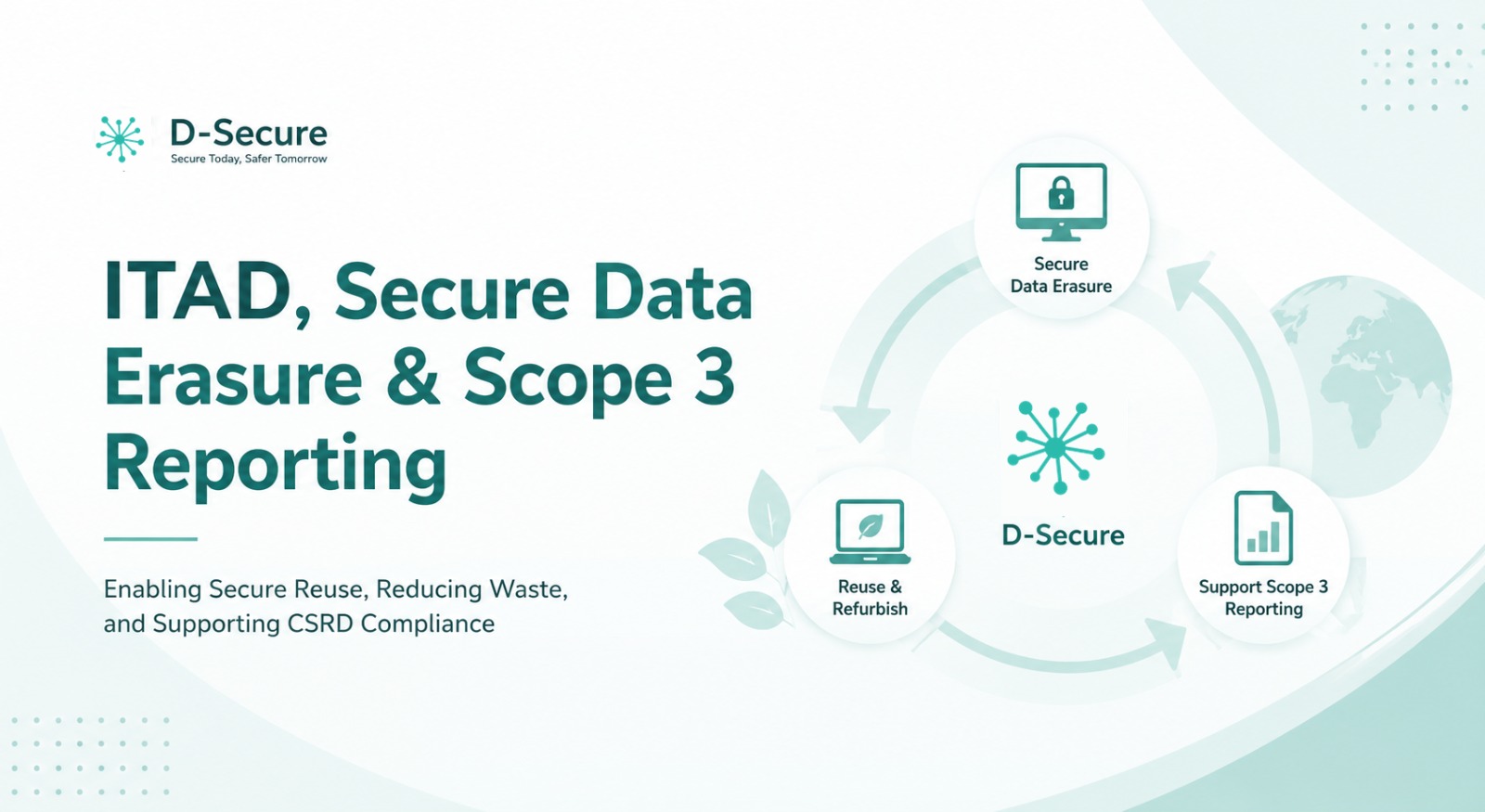
ITAD, Secure Data Erasure, and the Growing Importance of Scope 3 Reporting
By D-Secure Editorial TeamSeptember 02, 2026
The March 18, 2026 Omnibus I amendment to the CSRD reduces the number of companies that fall within its reporting scope. However, organizations that remain subject to the requirements still need to address sustainability reporting under the ESRS, including relevant Scope 3 emissions. This puts IT Asset Disposition (ITAD) and secure data erasure in a more important position within the technology lifecycle.
Why Is ITAD Becoming a Board-Level Priority?
The EU Corporate Sustainability Reporting Directive (CSRD), amended through the Omnibus I Directive, came into force on March 18, 2026. The amendment narrowed the number of organizations required to report, with the revised scope generally covering undertakings and groups with more than 1,000 employees and more than €450 million in net annual turnover.
For organizations that remain within scope, sustainability reporting and limited assurance requirements continue to matter. The focus is not simply on whether a company has sustainability initiatives in place. Organizations increasingly need reliable and verifiable information about their environmental impact, including material Scope 3 emissions.
Scope 3 is particularly important because it extends beyond a company's direct operations and includes emissions throughout its wider value chain. For organizations with significant technology inventories, this can bring areas such as purchased capital goods and the treatment of operational waste into the conversation.
CSRD non-compliance penalties are determined under the applicable national rules of each EU Member State and are required to be effective, proportionate, and dissuasive. However, financial penalties are only part of the risk. A mismatch between an organization's sustainability claims and the evidence supporting those claims can also affect stakeholder confidence and corporate reputation.
This is where IT Asset Disposition (ITAD) becomes increasingly relevant.
For organizations managing large technology estates, ITAD can provide a structured way to manage retired devices while considering security, recovery, reuse, recycling, and end-of-life treatment. Secure data erasure is particularly important because it can determine whether a functional device can safely move toward another lifecycle—or whether physical destruction becomes the only practical option.
When an ITAD provider securely erases, verifies, tests, and prepares an asset for reuse, the device may be transferred to another organization instead of being immediately discarded or replaced with newly manufactured hardware.
That creates a connection between data security, asset recovery, circularity, and sustainability.
Why Is ITAD Becoming More Important in the ESG Conversation?
For organizations with substantial IT estates, two Scope 3 categories are especially relevant when considering the lifecycle of technology assets:
1. Category 5 — Waste Generated in Operations
Category 5 covers emissions associated with the disposal and treatment of waste generated through an organization's operations. This can include solid waste such as electronic waste, as well as wastewater.
For IT-heavy organizations, the way retired computers, servers, storage devices, and other electronics are handled can therefore become an important part of the broader environmental impact discussion.
2. Category 2 — Capital Goods
Category 2 covers upstream emissions associated with capital goods purchased or acquired during the reporting year.
Technology hardware can fall within this broader capital-goods conversation. The question then becomes how organizations can make better lifecycle decisions around technology rather than treating every retired device as a one-time purchase-and-disposal cycle.
The Common Link: Reuse
The connection between these two areas is asset reuse. But before a device can be safely reused, one issue has to be addressed first: The data stored on that device must be securely removed.
Data Erasure: The Critical Step Behind IT Asset Reuse
Imagine two organizations: Company 1 and Company 2.
Company 1 is retiring a fleet of laptops and servers. Many of the devices are still fully functional and could potentially serve for several more years. However, those devices contain business information, user data, credentials, application data, and other sensitive information.
Simply deleting files or performing a standard factory reset may not provide the level of assurance required for secure disposition. Physical destruction removes the data-security concern, but it also removes the possibility of recovering the device for another useful lifecycle.
Secure data erasure provides another option.
An ITAD provider can use a solution such as D-Secure Drive Eraser to securely erase data from eligible storage devices, verify the erasure process, and generate detailed documentation. Hardware diagnostics can then help determine the condition of the device and whether it is suitable for reuse, refurbishment, recycling, or another disposition route.
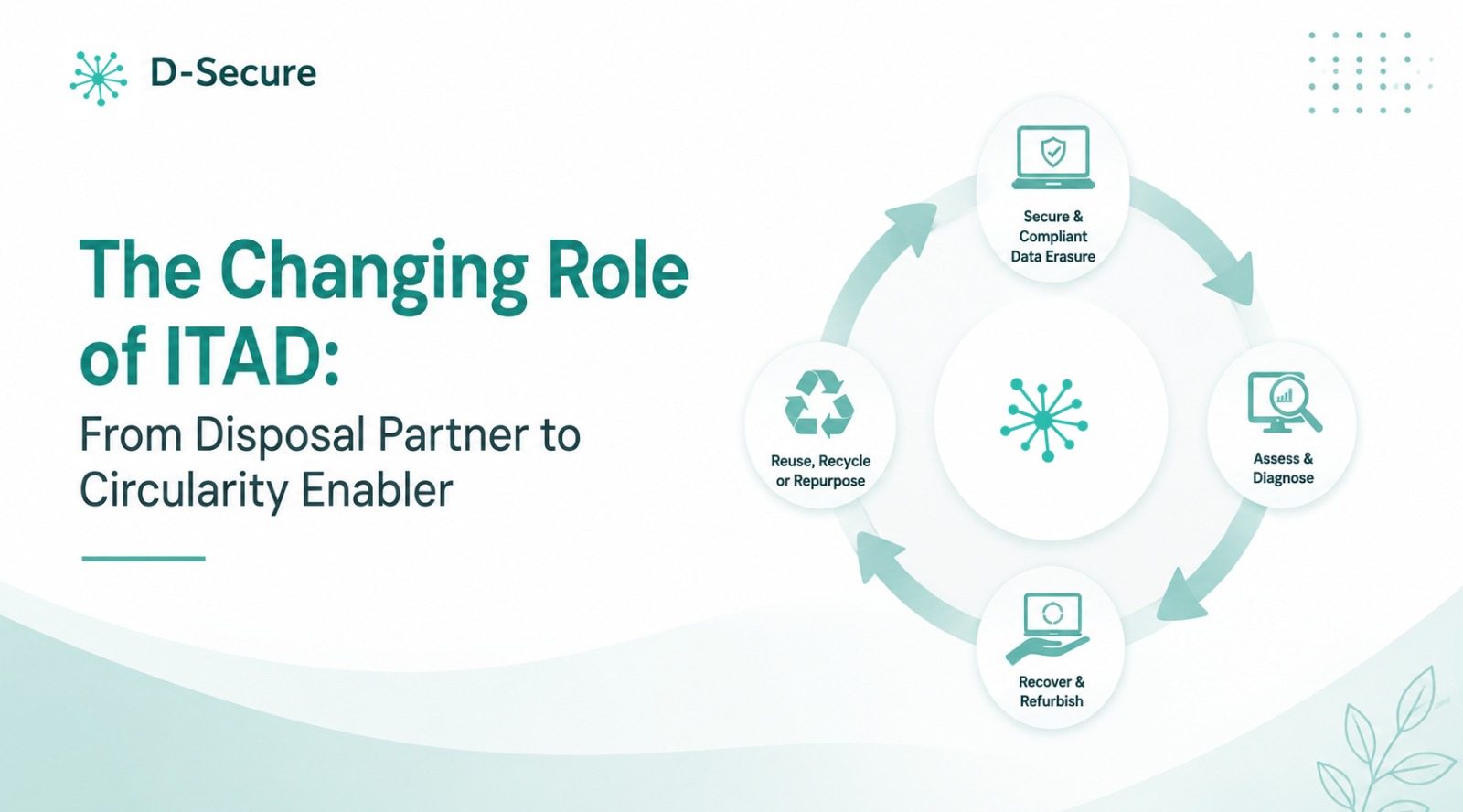
Retire → Securely Erase → Verify → Diagnose → Recover → Reuse
The result is more than simply a wiped device. It creates an evidence trail showing how the asset was handled after retirement. For Company 1, that documented process can help demonstrate that suitable assets were evaluated for reuse instead of automatically being sent for destruction or waste treatment.
Where an asset is genuinely diverted from a waste-treatment pathway toward legitimate reuse, there may be an environmental benefit. However, any resulting emissions impact must be calculated according to the organization's applicable Scope 3 methodology and supported by appropriate evidence.
How Can ITAD Support Lower-Impact Technology Procurement?
Now consider what happens to the device after Company 1's ITAD process.
A securely erased and tested laptop may be refurbished and subsequently acquired by Company 2. Instead of purchasing an entirely new device, Company 2 gains access to equipment that has already completed one useful lifecycle and has been prepared for another.
Extending the useful life of existing technology can help reduce the need for additional newly manufactured hardware. Manufacturing new electronic equipment involves raw materials, energy, transportation, and other upstream environmental impacts. This makes professionally refurbished and reused equipment relevant to organizations developing a circular procurement strategy.
The exact Scope 3 accounting treatment for second-hand or reused capital goods will depend on the organization's accounting policies and the applicable GHG accounting methodology. Nevertheless, the operational principle remains important: Keeping functional technology in productive use for longer can support a more circular approach to IT asset management.
The Changing Role of ITAD: From Disposal Partner to Circularity Enabler
Traditionally, ITAD was often viewed primarily as the final step in the technology lifecycle—something that happened after an organization had finished using its equipment. That role is changing.
An effective ITAD process can connect data security, asset recovery, reuse, recycling, compliance, and sustainability within a single lifecycle.
One ITAD transaction can potentially create value for two organizations:
- Company 1 receives a secure and documented path for retiring its technology while identifying assets that may still have recovery value.
- Company 2 gains access to equipment that can support another useful lifecycle without necessarily requiring the manufacture of an entirely new device.
This makes ITAD increasingly relevant to broader ESG and sustainability strategies. The process can also provide organizations with the documentation needed to understand what happened to individual assets after retirement.
Why Data Erasure Matters
Secure data erasure is the critical enabler because data-security concerns can otherwise make physical destruction the default choice for retired technology.
- Diagnostics help identify assets that are technically suitable for recovery.
- Secure erasure removes the data barrier that prevents those assets from being reused.
- Reporting and documentation create an evidence trail for the asset's disposition.
- And reuse helps keep functional hardware in circulation for longer.
Together, these steps turn ITAD from a simple disposal activity into a more structured part of responsible technology lifecycle management.
What Does This Mean for Organizations?
As CSRD and ESRS reporting requirements continue to evolve, organizations need to look beyond simply retiring technology securely. They also need to understand what happens to those assets afterward. A documented, audit-ready sanitization process can help connect secure IT asset retirement with broader ESG and sustainability processes.
For organizations with large technology estates, this means being able to demonstrate:
- Which assets were retired
- How and when data was securely erased
- Whether erasure was successfully verified
- Which devices were suitable for reuse or refurbishment
- What happened to each asset afterward
- Whether the asset was reused, recycled, or otherwise disposed of
- What documentation supports the final disposition
D-Secure helps enterprises and ITAD providers build this evidence trail through secure data erasure, verification, asset-level reporting, and supporting capabilities for responsible IT asset disposition.
"How much value, useful life, and environmental responsibility can we preserve before that technology reaches the end of its lifecycle?"
Ready to Align ITAD with Scope 3?
With D-Secure, enterprises and ITAD providers can securely erase sensitive information while maintaining detailed records of the sanitization process—helping create a stronger foundation for secure asset reuse and responsible disposition.
Solutions for Compliance
Explore the full D-Secure data security suite
Drive EraserNIST 800-88 compliant HDD & SSD secure erasure
Drive VerifierPost-erasure verification — confirm zero data traces
File EraserSecure file & folder shredding beyond Recycle Bin
Expert Solution
How Do Experts Handle This?
Enterprise-grade data sanitization requires more than just standard deletion. Experts use professional software like Drive Eraser to ensure 100% data destruction across all media types.
Standard Compliance
Meeting NIST 800-88 and GDPR standards with full audit trails.
Enterprise Ready
Scalable solutions for ITAD partners and large organizations.
Securing Data Everywhere
Trusted by global enterprises for zero-leakage data sanitization.
100%
Verified
0
Leaks
24/7
Support
Related Articles
Data Erasure
Enterprise Data Erasure Compliance Guide | D-Secure
By Prashant SainiAugust 24, 2026
Standards
NIST SP 800-88 Rev. 2 (Final, September 2025) — Official Media Sanitization Guidelines Explained
By Prashant SainiJuly 17, 2026
Government
Government IT Disposal Requirements
By Nitesh KushwahaJanuary 11, 2026
Frequently Asked Questions
Comments (0)
Your email address will not be published. Providing an email is optional.
Have Questions About This Topic?
Send us an enquiry regarding: ITAD, Secure Data Erasure, and the Growing Importance of Scope 3 Reporting
No comments yet. Be the first to comment.